Wayne Peters Horsemanship
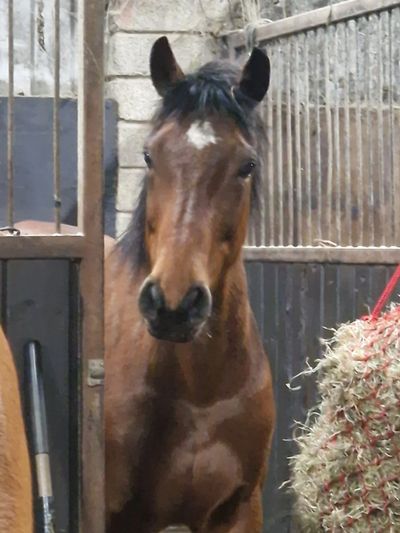
Rumba
Growing up, I idolised Monty Roberts, the man who listened to horses. His story with Shy Boy fascinated me, as did the work of horsemen like Ray Hunt and, more recently, Warwick Schiller and Tristan Tucker.
Different people, different approaches, but they all seemed to understand something that went beyond training techniques or simply getting a horse to do what was asked.
What fascinated me was the relationship, the trust, and how sometimes one particular horse could change everything you thought you knew.
For me, that horse is Rumba.
When thinking gets in the way
Have you ever found that the harder you try to get something right with your horse, the harder it becomes?
For years, I could catch, load and handle horses others struggled with. I wasn't consciously following a technique. Somehow, I just knew when to ask, when to wait and when to leave things alone.
Then I began studying how and why those things worked. I understood more, but strangely, sometimes I could do less!
I was thinking so much about getting it right that I stopped noticing what was happening right in front of me.
And I see the same thing with horse owners. We become focused on the outcome, add another cue, another correction, more noise, and miss the quieter things the horse is telling us.
Sometimes the answer isn't another technique. It's learning to filter out the noise, become clearer in our intentions and recognise what's happening in the moment.
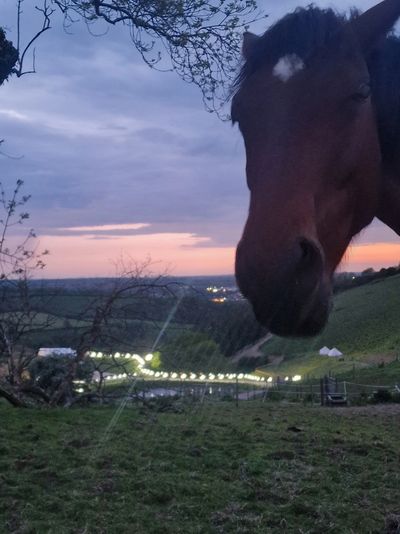

Learning to listen
Rumba seemed to have had a good start. He was sweet, kind and lovely to be around. Until something made him feel unsafe. Then anxiety could take over, and he struggled to find his way back to calm.
He's taught me something I hadn't fully appreciated before.
It wasn't simply how aware I was of him. It was how aware I was of his awareness of me.
Horses have spent millions of years evolving to understand their surroundings, with safety fundamental to their survival. We've lived and worked alongside them for thousands of years, and once depended on them in ways most of us no longer do.
I wonder whether that reliance then made us pay closer attention.
Today, we arrive with our goals, expectations, methods and techniques. Yet horses still communicate in extraordinarily subtle ways, and much of what we bring to the conversation is simply noise.
I began to realise how much of that noise was coming from me.
It took me back to those childhood adventures with Topaz. Back then, I wasn't thinking about techniques. I was simply there, in the moment.
Our story continues
Rumba and I have come a long way. Situations that once overwhelmed him are now met with more curiosity, willingness and trust. He's becoming more reliable, and we're more connected. The difference is profound.
And that difference hasn't come from demanding more obedience. It's come from understanding him better, being clearer in what I ask, and giving him the confidence to work with me rather than simply respond to me.
Training matters. But there's a world of difference between a horse doing what it's told and a horse that understands, trusts and willingly participates.
I have high aspirations for Rumba. The foundations we've built are giving us so much more to work with, and he's becoming a wonderful partner in demonstrating the groundwork, communication and awareness I teach.
He's changed how I look at horses, and perhaps more importantly, how I look at myself.
I've learned enough over the years to know I can help others, and enough from Rumba to know there's always more to understand.
If things aren't quite working with your horse, perhaps there's something missing from the conversation. That's where I can help.
You can meet Rumba at Coxleigh Barton, by arrangement. He's one of the gentlest, kindest horses you'll meet, and I'm looking forward to seeing just how far we can go together.
Our story continues...